
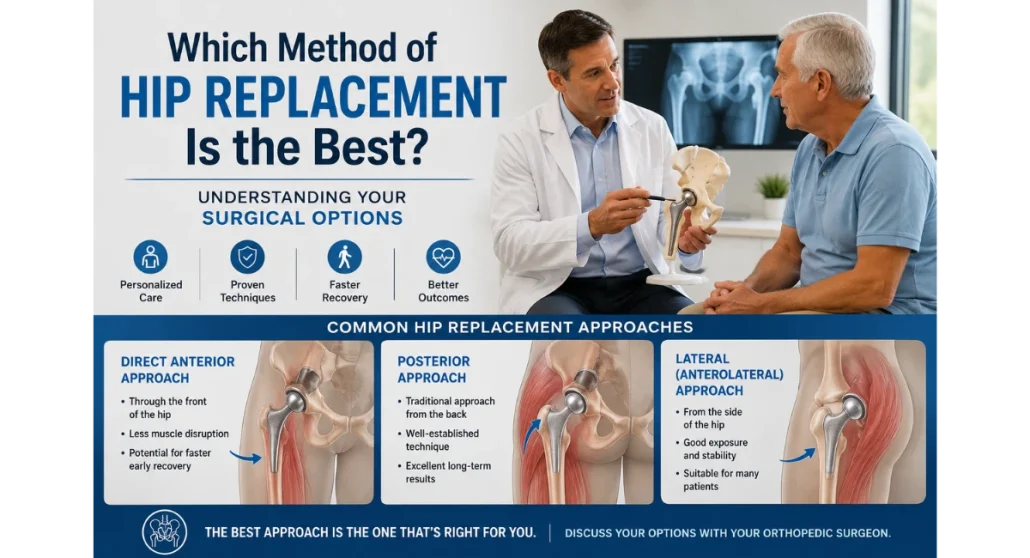
Which Method of Hip Replacement Is the Best? Understanding Your Surgical Options
Many people who are preparing for hip replacement surgery ask the same question: “Which method of hip replacement is the best?” After reading articles online or talking with friends, you may hear about anterior, posterior, or minimally invasive hip replacement. It’s easy to wonder which option is right for you.
The truth is that there is no single hip replacement method that is best for everyone. Every patient is different. Your age, overall health, body type, lifestyle, medical history, and the condition of your hip all play an important role in choosing the most appropriate surgical approach.
Modern hip replacement surgery has helped millions of people regain mobility, reduce pain, and return to activities they enjoy. Whether you live in Arizona, Scottsdale, or the Phoenix metropolitan area, understanding your treatment options can help you feel more confident when discussing surgery with your orthopedic surgeon.
What Is Hip Replacement Surgery?
Hip replacement surgery, also called total hip replacement or total hip arthroplasty, is a procedure that replaces damaged parts of the hip joint with artificial components called implants.
The hip is a ball-and-socket joint that allows smooth movement while walking, climbing stairs, and performing everyday activities. Conditions such as osteoarthritis, rheumatoid arthritis, hip fractures, or bone-on-bone hip arthritis can damage the joint and cause pain, stiffness, and reduced mobility.
During surgery, the damaged cartilage and bone are removed and replaced with durable implants designed to restore movement and relieve pain.
For many patients, hip replacement is recommended when non-surgical treatments such as medications, physical therapy, injections, or activity modification no longer provide enough relief.
Which Method of Hip Replacement Is the Best?
Quick Answer
There is no single “best” method of hip replacement for every patient. The most appropriate surgical approach depends on your anatomy, overall health, activity level, severity of arthritis, previous surgeries, and your surgeon’s clinical evaluation.
Each surgical approach has advantages and considerations. An experienced orthopedic surgeon carefully evaluates your condition before recommending the approach that is most appropriate for your individual needs.
Rather than focusing on which method is “better,” it is more helpful to understand which approach is best suited for your specific situation.
Common Hip Replacement Approaches
Direct Anterior Hip Replacement
The direct anterior hip replacement approach reaches the hip joint from the front of the body.
Instead of separating major muscles, the surgeon works through a natural space between muscles whenever possible.
Potential Advantages
- Smaller incision in appropriate patients
- Less muscle disruption
- Earlier walking for some patients
- Potentially quicker early recovery
- Lower risk of certain movement restrictions immediately after surgery
Considerations
Not every patient is a good candidate for this approach. Factors such as body type, previous hip surgery, bone anatomy, and the complexity of the procedure may influence whether it is appropriate.
Posterior Hip Replacement
The posterior approach has been used successfully for many years and remains one of the most common hip replacement techniques worldwide.
Surgeons are highly experienced with this method, and it provides excellent visibility of the hip joint during surgery.
Benefits
- Well-established surgical technique
- Excellent access to the hip joint
- Suitable for many different patient types
- Widely supported by long-term clinical outcomes
Recovery Considerations
Patients may temporarily follow certain movement precautions during recovery to reduce the risk of hip dislocation while the tissues heal.
Lateral (Anterolateral) Hip Replacement
The lateral, or anterolateral, approach enters the hip from the side.
This method may be recommended depending on the patient’s anatomy and specific hip condition.
Benefits
- Good joint stability
- Effective exposure of the hip joint
- Appropriate for certain complex cases
Considerations
Recovery may vary depending on the individual patient and the muscles involved during surgery.
What Factors Help Determine the Best Surgical Approach?
Choosing the right hip replacement technique is a personalized decision. Your orthopedic surgeon considers several important factors before recommending a surgical approach.
Age
Younger, active adults may have different goals than older patients. Age helps guide treatment planning but is only one part of the decision. When Is the Right Age for Hip Replacement? Arizona Expert Advice.
Body Type
Body size and anatomy can influence which surgical approach provides the safest and most effective access to the hip joint.
Bone Quality
Healthy bone helps support the implant. Bone loss or osteoporosis may influence surgical planning.
Severity of Arthritis
Advanced arthritis, joint deformity, or bone damage may require a specific surgical approach.
Previous Hip Surgery
Patients who have had prior hip procedures or fractures may require a different approach than someone having their first hip replacement.
Medical History
Medical conditions such as diabetes, heart disease, or other health concerns may affect surgical planning and recovery.
Activity Level
Lifestyle and daily activities help determine the type of implant and surgical approach that best fits your long-term goals.
Overall Health
Good overall health supports healing and recovery after surgery.
Surgeon Experience and Clinical Judgment
An experienced orthopedic surgeon selects the surgical approach that offers the safest and most predictable outcome for your individual condition. The surgeon’s experience with a particular technique is an important part of achieving successful results. Top Hip Surgeon Qualifications & Experience.
Does a Minimally Invasive Hip Replacement Mean a Better Outcome?
Many patients believe that a smaller incision automatically means a better surgery, but that is not always true.
Minimally invasive hip replacement refers to techniques that use smaller incisions and aim to reduce soft tissue disruption. While these approaches may offer benefits for some patients, the size of the incision alone does not determine the quality or long-term success of the surgery.
Successful outcomes depend on many factors, including:
- Accurate implant positioning
- Proper surgical planning
- Appropriate patient selection
- Good rehabilitation
- Following post-operative instructions
A slightly larger incision that allows the surgeon to perform the procedure safely may provide a better overall result than choosing a smaller incision simply for cosmetic reasons.
What Can You Expect During Recovery?
Recovery after hip replacement varies from person to person, but most patients begin standing and walking shortly after surgery with guidance from their healthcare team.
During recovery, patients can expect:
- A short hospital stay, depending on individual needs
- Early walking with assistance
- Physical therapy to improve strength and flexibility
- Pain management through a personalized treatment plan
- Gradual return to everyday activities
- Continued improvement over several months
Most patients notice significant pain relief and improved mobility as healing progresses. Following rehabilitation recommendations plays an important role in achieving the best possible outcome.
Have Questions About Hip Replacement Options?
Contact Hip Replacement Expert
Frequently Asked Questions
1. Which method of hip replacement is the best?
There is no single best method. The most appropriate approach depends on your individual anatomy, health, and the surgeon’s evaluation. Types of Hip Replacement Surgery: What You Should Know
2. Is anterior hip replacement better than posterior?
Neither approach is universally better. Each has advantages and may be appropriate for different patients.
3. Which hip replacement approach has the fastest recovery?
Some patients undergoing direct anterior hip replacement may experience a quicker early recovery, but recovery varies based on many individual factors.
4. Is minimally invasive hip replacement better?
Not necessarily. A minimally invasive approach may benefit some patients, but long-term success depends on proper surgical technique and patient-specific factors rather than incision size alone.
5. How long does hip replacement recovery take?
Many patients return to daily activities within several weeks, while full recovery and continued improvement may take several months.
6. Will my surgeon recommend the best approach for me?
Yes. Your orthopedic surgeon evaluates your medical history, imaging, anatomy, and treatment goals before recommending the most appropriate surgical approach.
7. Can older adults have anterior hip replacement?
Age alone does not determine eligibility. Overall health, anatomy, and other medical factors are more important considerations.
8. How successful is modern hip replacement surgery?
Modern hip replacement is considered one of the most successful orthopedic procedures, providing long-term pain relief and improved mobility for many patients.
Final Thoughts
Choosing the right hip replacement method is not about finding a single technique that works for everyone. Instead, it is about selecting the approach that best matches your individual needs, health, anatomy, and lifestyle.
Modern hip replacement surgery offers several effective surgical approaches, each with its own advantages and considerations. Whether an anterior, posterior, or lateral approach is recommended, the goal remains the same—to relieve pain, restore movement, and improve quality of life. What Happens If You Delay Hip Replacement Surgery?
Taking the time to understand your options and asking questions during your consultation can help you make informed decisions and feel more confident about your treatment journey.
About the Author

Dr. Matthew W. Russo
Dr. Matthew W. Russo is a third-generation, board-certified, fellowship-trained orthopedic specialist in total hip replacement and total knee replacement surgery. He is dedicated to providing evidence-based orthopedic care and helping patients better understand their treatment options through clear, patient-focused education.

